

Changing tack, not hanging up the wellies
Changing the farm’s game plan looks more popular than calling it a day.
The latest Farming Conditions Monitor poll suggests farmers are responding to economic and policy pressures by adapting their businesses, rather than making a widespread retreat from production. Of the 735 farmers surveyed, 71.8% expect to carry on broadly as they are today. Meanwhile, 17.1% are considering business changes, with major restructuring or exit responses accounting for 4.6%. The headline? So more fine-tuning than farewell.
| KPI | Result |
| Farmers surveyed | 735 |
| No major planned change | 71.8% |
| Considering business changes | 17.1% |
| Major restructuring/exit responses | 4.6% |
| Most common planned action | Change enterprise mix |
A change of mix tops the list
| Planned Change | Mentions |
| Change enterprise mix | 63 |
| Reduce production | 16 |
| Diversify into new enterprises | 8 |
| Increase production | 8 |
| Energy maize expansion | 7 |
| Cover crops adoption/td> | 6 |
Changing crops, livestock or product mix was the most frequently mentioned planned action, with 63 mentions.
Reducing production followed with 16, while diversification and increased production each received eight. Energy maize expansion attracted seven mentions and cover crops six. The figures suggest the emphasis is on getting more from the business already there, rather than simply making it bigger. For farmers across the UK and Ireland, that brings the discussion back to familiar farm office territory: what earns its keep, what fits the support schemes, and what makes the best use of the land? Weather risk is part of that calculation too. The apparent priority is a business better able to cope with uncertainty.
Green choices, practical reasons
Cover crops, herbal leys, drought tolerant grass systems and changes linked to environmental schemes all featured in responses. The poll points towards environmental decisions becoming business decisions too. The suggested motivation goes beyond ticking a compliance box: productivity, soil health and managing risk are also in the mix. In other words, these measures appear to be finding a place in the farm’s practical plans, not just its paperwork. For seed, crop protection, biologicals, soil management and advisory businesses, that could mean greater demand for practical ways to help farms cope with changing conditions.
Bigger isn’t the only game in town
There is little sign of a rush to ramp up output in these responses. Increasing production received eight mentions, compared with 16 for reducing it—twice as many. Instead, the picture is one of cautious decision making: improving margins, using inputs efficiently, reviewing which enterprises belong in the business and reducing risk. The focus appears to be on making the numbers work, not simply making them larger. That sends suppliers a fairly down-to-earth message. Products and services built around profitability, efficiency, labour saving and risk management may strike more of a chord than promises of production growth.
A quieter signal worth watching
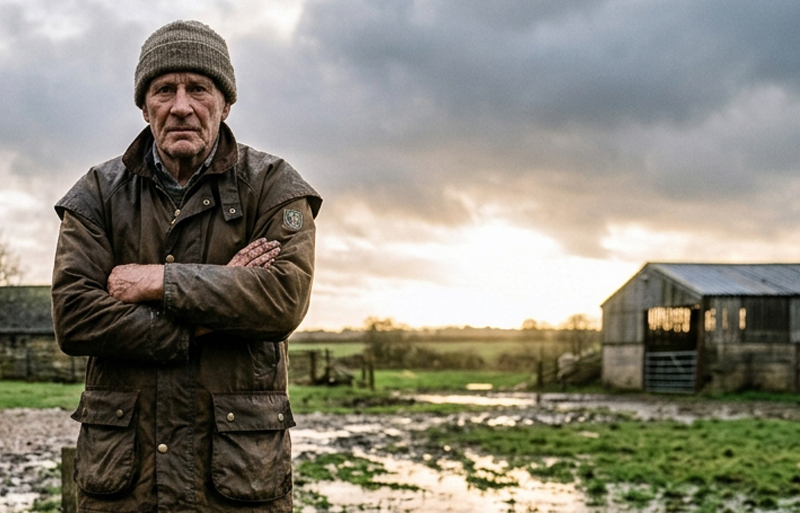 Behind the broad picture of farmers carrying on, a minority mentioned leaving farming or dairy production, reducing arable activity, or renting out land.
These responses may point to continued structural adjustment within agriculture. They are not widespread enough in this poll to suggest significant contraction, but they underline the pressures still facing some sectors and regions.
The bottom line: better decisions, not just more output
Taken together, the poll suggests farmers are learning to work around ongoing uncertainty, adapting their businesses rather than heading for the exit. For the UK and Irish farming audience, the thread running through the findings is practical resilience. NFRU expects demand to be strongest for support that helps farmers manage costs, improve resilience, find the right enterprise mix, use land efficiently and navigate changing support schemes. Its message to agri-businesses for the next 12–24 months is simple:
Help farmers make better decisions, rather than just sell them more. Partners who focus on resilience, profitability and risk management are likely to be closest to what farmers are looking for. Less “more of everything”, more “what works here”.
National Farm Research Charitable Donations
| Cumulative Donations since Oct 2018 | |
| RABI | £15,271.45 |
| RSABI | £1,948.61 |
| Forage Aid | £10,637.21 |
| Farming Community Network | £7,315.00 |
| Rural Support NI | £773.30 |
| Embrace Farm | 5257.70€ |
RABI - Freephone helpline on 0800 188 4444.
Email at
RSABI - Freephone 0808 1234 555
Forage Aid (Addington Fund) – Helpline 01926 620135
Farming Community Network – Helpline 03000 111 999
email
Rural Support – Helpline 0800 1381 678
Embrace Farm Ireland – Helpline Ireland 085 77 09 966
Our Support for Farmers
Farmers participating in our on-going research studies can gain valuable BASIS and NRoSO points. Simply give your BASIS number to our interviewer when they call to update your record. To claim your NRoSO points please log onto the website and enter code NO471443f
This code is valid for 12 months from the 1st September 2025


We are always pleased to receive your feedback, or if you would like to have your views and opinions heard by taking part in our research projects please email: